I decided about 12 hours before to head out to NAB, squeaking in a visit to the showroom floor on Tuesday, April 21, the day before I had a shoot. I booked a cheap same day roundtrip flight and crossed my fingers I would see something new and exciting. And while there was nothing groundbreaking, it was a solid year of advancements, refinements, and a lot of new AI tools in the post-production world.
Note: I’m not paid for any of these reviews, and I recieve no $ for the links below – they are just there to save you time!
Cameras
Now that Nikon has purchased RED, we are seeing the first major combined effort. The Nikon ZR.
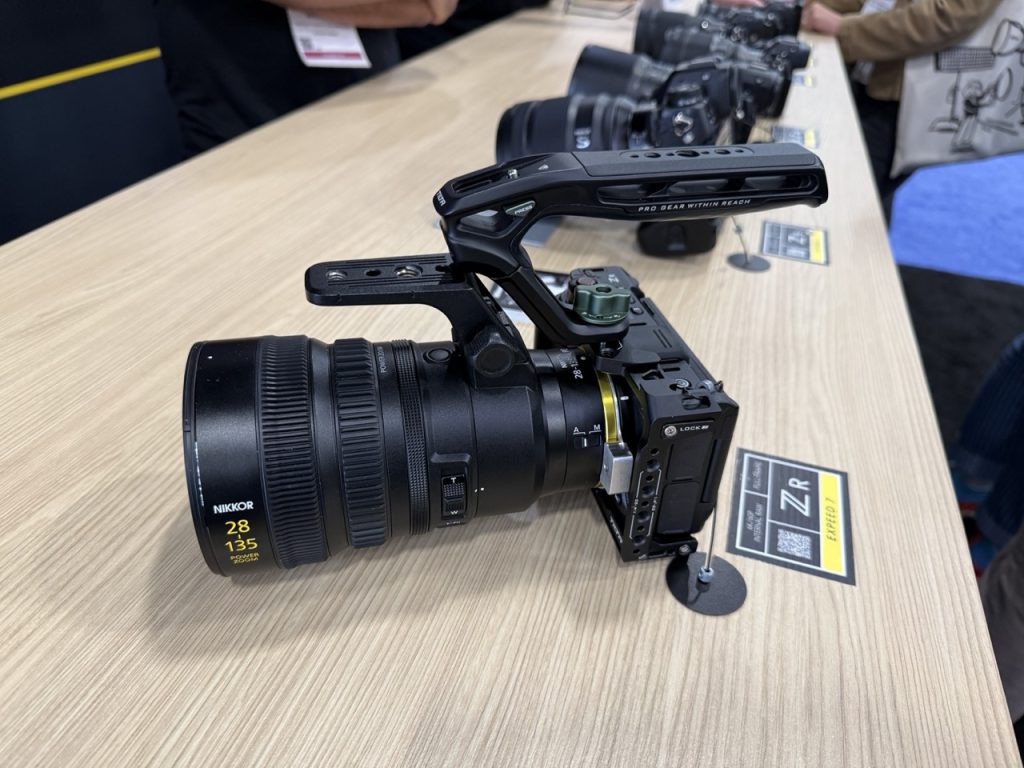
Released in September of 2025, It’s a small mirrorless camera body that quickly switches from photo to video mode virtually instantaneously (especially fast compared to may Canon R5c which takes a frustrating few seconds). It’s a full frame sensor (not RED’s sensor), but it does record a data-heavy flavor of REDCode called R3D NE at up to 6K. It can also record ProRes ProRes RAW/HQ, H.265/H.264 Codecs. It has a dual-base ISO, and 15+ stops of dynamic range. The 4″ display is bright (1000 cd/m² brightness) and is probably big enough to not need an external monitor. There is no viewfinder. Its uses Nikon’s Z-Mount, which has the closest flange distance in the mirrorless world, meaning you can use an adapter to make your EF, RF, and even PL-Mount lenses work with it. It’s autofocus is one of the big selling points – touchscreen autofocus or face detection that seem to work really well. And the auto focus even works with adapter with compatible lenses. It has 32-bit Float audio built in and a built-in microphone for scratch audio. You can use its 1/8″ audio jack, or they sell an integrated module that sits on top of the camera and plugs into the hot shoe. It’s small and light, and would be a great option for RED shooters as a small, lightweight B or C-Cam option. Though certainly not a good as an actual RED camera for professionals, this camera is already quite popular and has found a lot of fans in the lower-budget market. You will likely need to add a rig, and SmallRig and Tilta both make great affordable options. And the camera’s body list price is only about $2200, so you can see why people are so excited.
Get the camera here: from Nikon or B&H
Get it here: Small Rig Cage
Get it here: Tilta Cage
Gimble
Need a gamble for that new Nikon ZR?
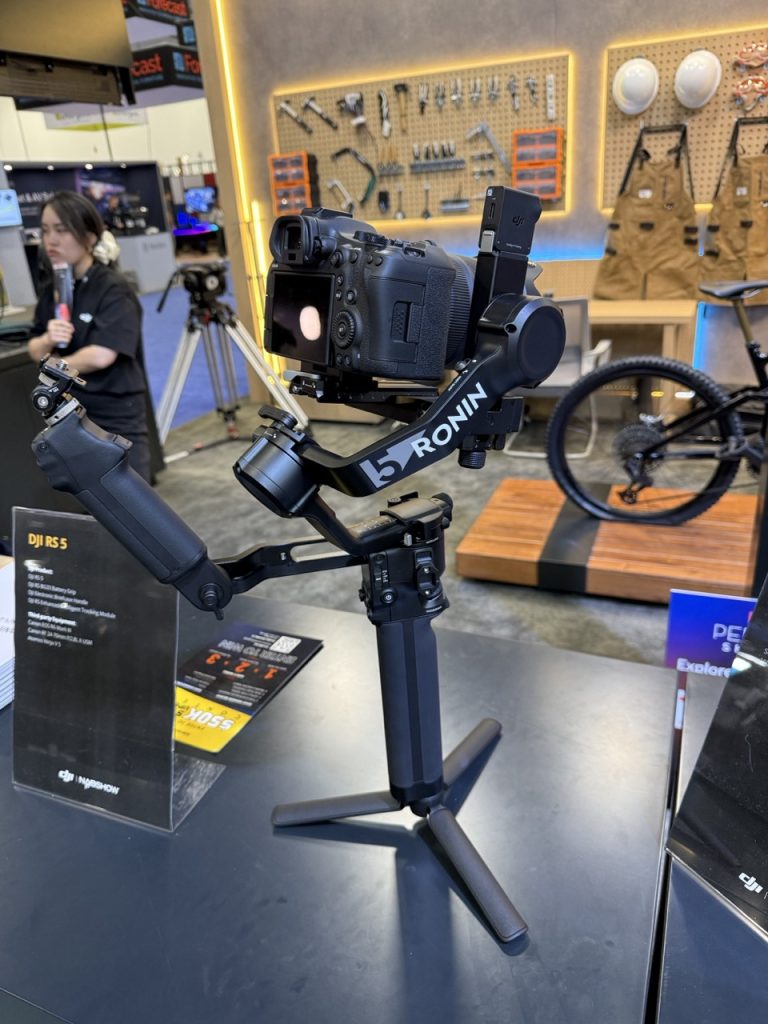
DJI was showing its latest gamble, the DJI RS 5. It has an improved tripod base that folds when you push down on only one of the 3 legs, as well as better motors and an included RS Enhanced Intelligent Tracking Module that follows the subject that is included. Holds up to 3kg (6.6 lbs). A great deal at the list price of only $569, or $719 with the tracking handle, as pictured. While this model will work for a lot of people, there was no new Ronin 5 Pro announced… Maybe in the future.
Check it out here: https://www.dji.com/rs-5
Lighting
While some vendors announced a few new improvements on lights, what I focused on was managing those lights. The Sidus Link Pro has been around for a few years, but they’ve added a 3D Visualizer to their software.
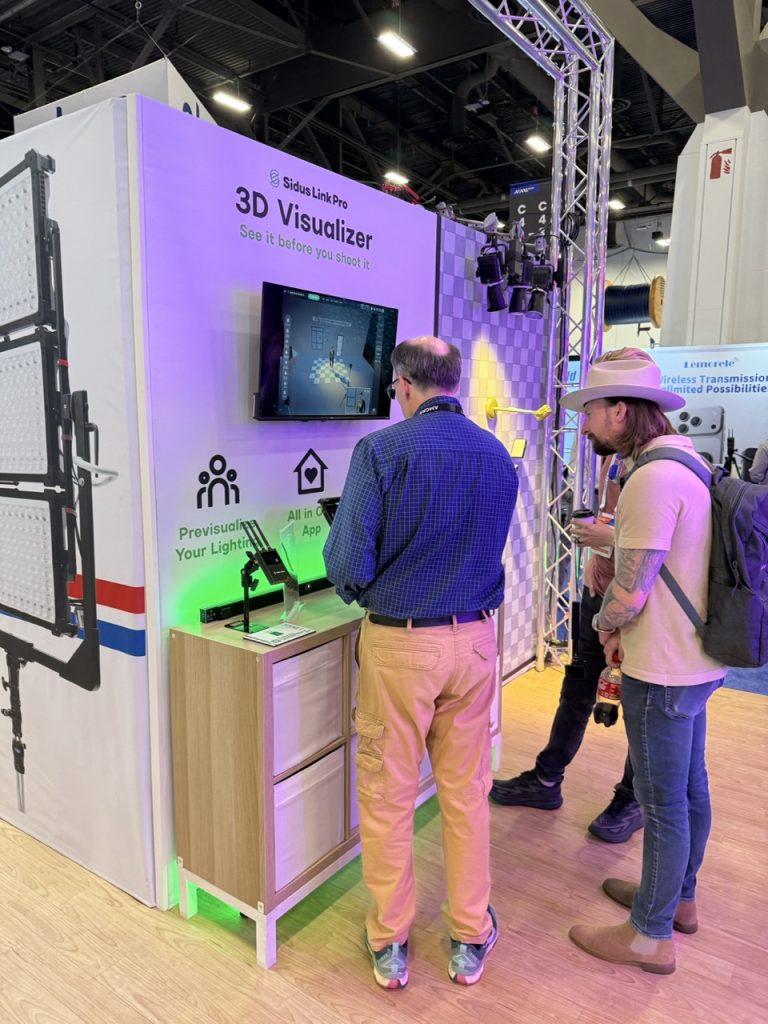
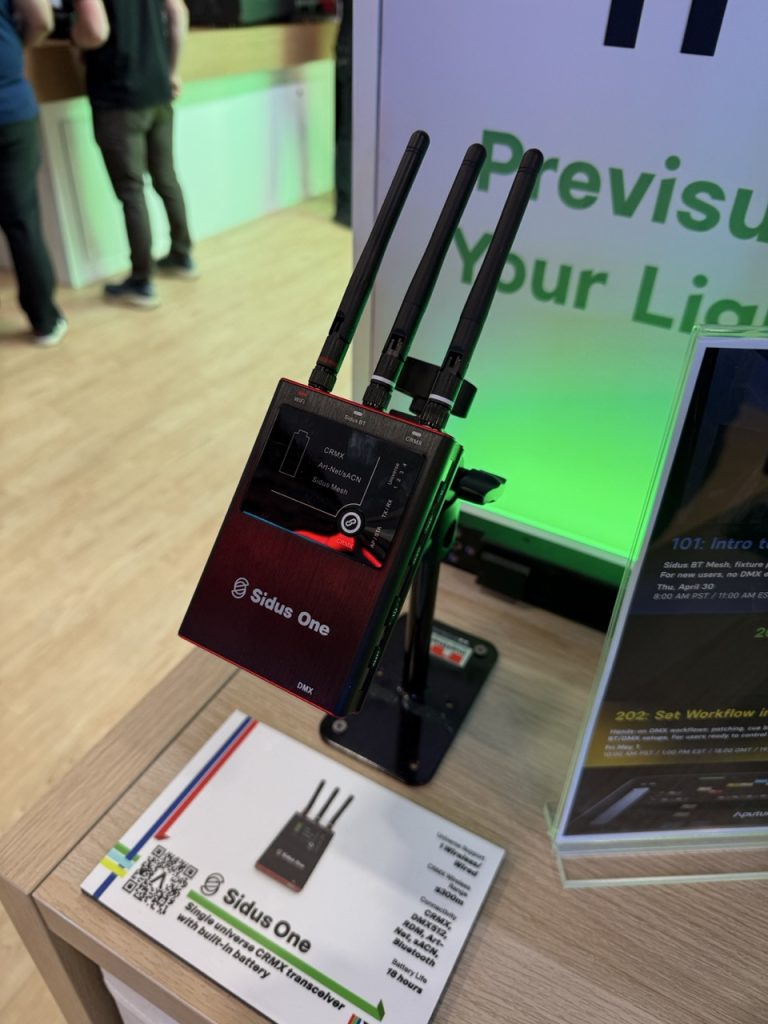
To take a step back, this is a combination of software (available as a monthly subscription that you can pay when you have a job you need it for) and a fairly inexpensive transmitter/receiver the Sidus One ($439 list) which will typically run one “universe” (roughly 30 lights, deepening on the complexity) via a wireless DMX protocol that is built into most modern LED’s. (They also offer a larger unit with 4 universes for under $2500, and can be daisy-chained for even more lights). This is great for people on a stage where there are many lights to change and cue, or even for a single DP setting up a number of lights that can be color changed and dimmed without physically moving around the set. The new 3D visualizer adds a great way to “pre-light” and look at your setup before arriving on set. This can save time if you have limited access to your location, or help show a client why you need the number of lights you need. This was developed and was initially made for Aputure lights, but runs on any light with DMX protocol.
Get it here: https://www.sidus.link/sidusLinkPro/software
Lenses
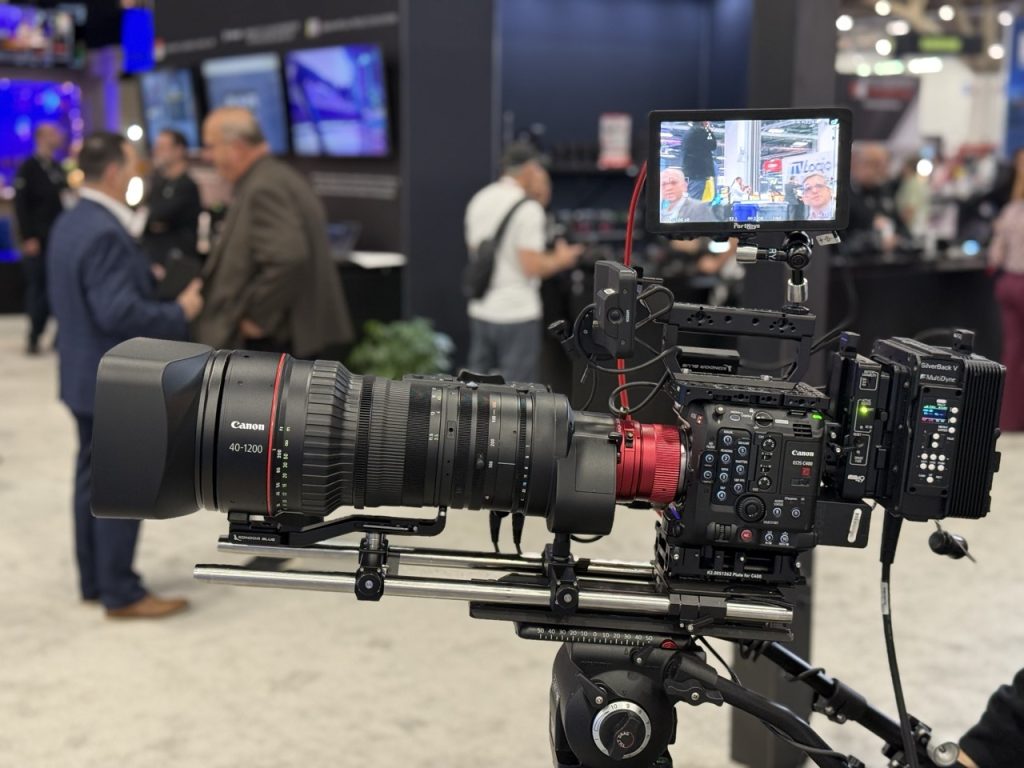
Canon announced a big s35/full-frame zoom: a 40-1200mm. It’s big in person! It comes with a zoom rocker, but due to its size and weight, I’d image you’d mostly be using this for concerts or wildlife shooting on a tripod. And it’s got a doubler on it too! You lose a bit of light at the end of the zoom, putting you around a f/8, but that’s not likely a problem for live events or outdoor shooting. Cost is about 80K, so most likely a rental item for most people.
DZOFilm has soft-announced two upcoming full-frame zoom lenses (at least 3 months away, probably more) – the Arles Zoom 25-75mm and the Arles Zoom 65-180mm. I believe both lenses will be a f/2.6, and are quite light and small compared to other lenses in this category.
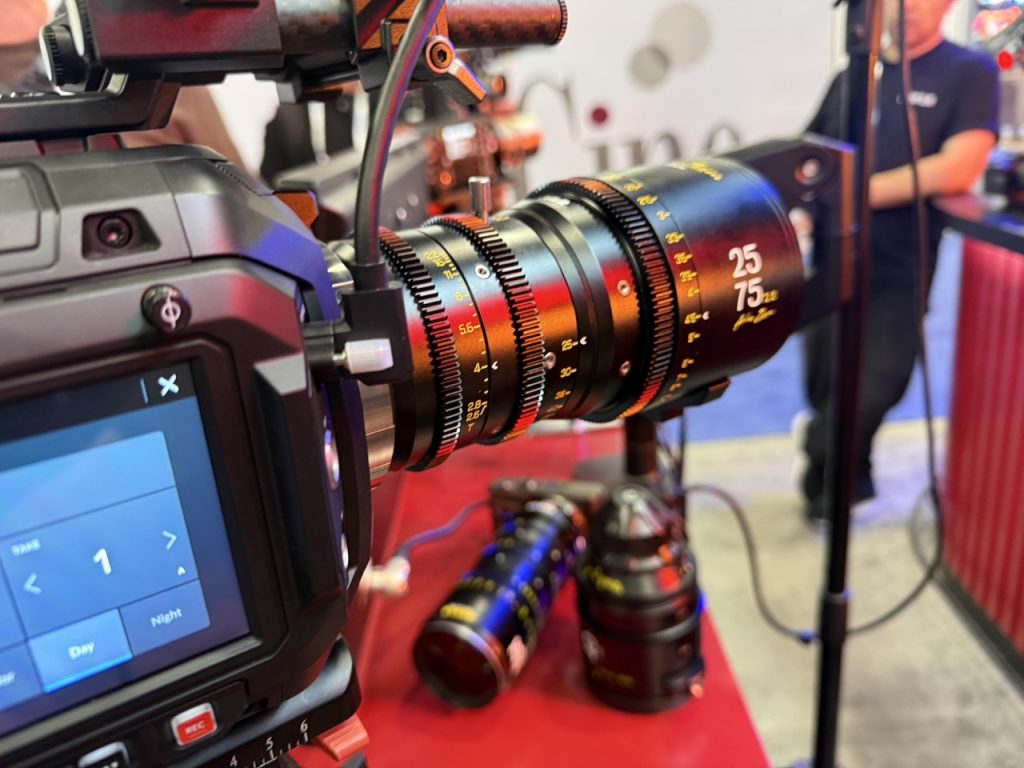
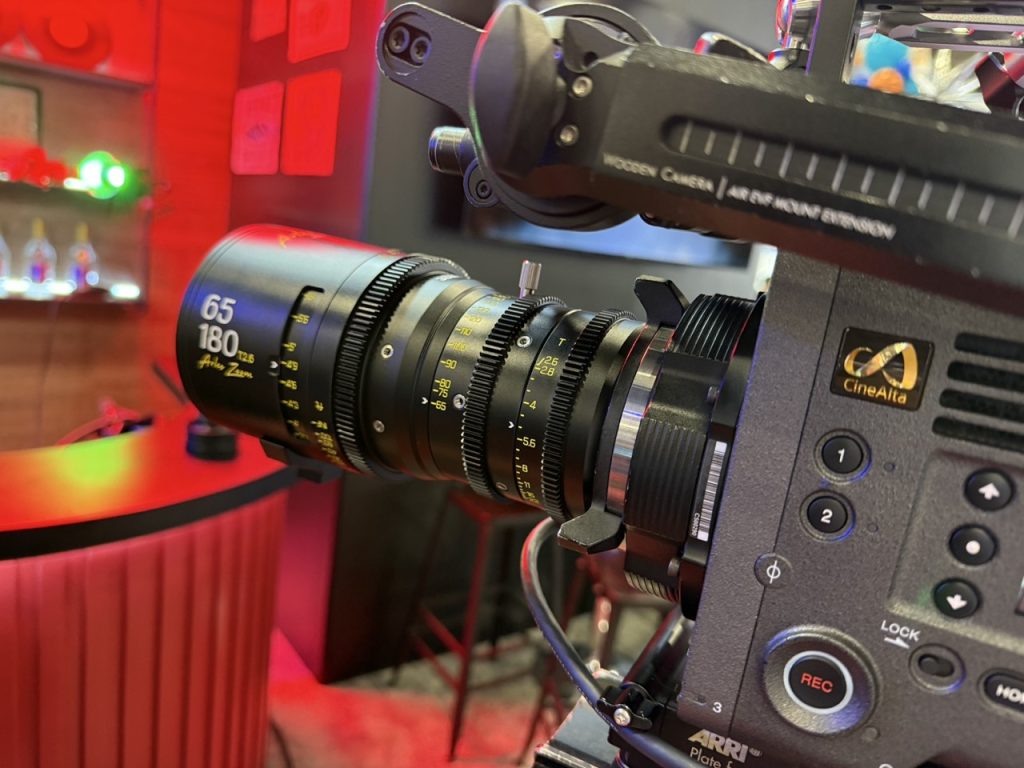
Price is not announced, but I got the impression that these will be sub-$5000 full frame zooms, which is pretty remarkable. This isn’t even listed on their website yet, so don’t tell anyone I told you! Ha!
Drone
Need a 360 drone? Why not!
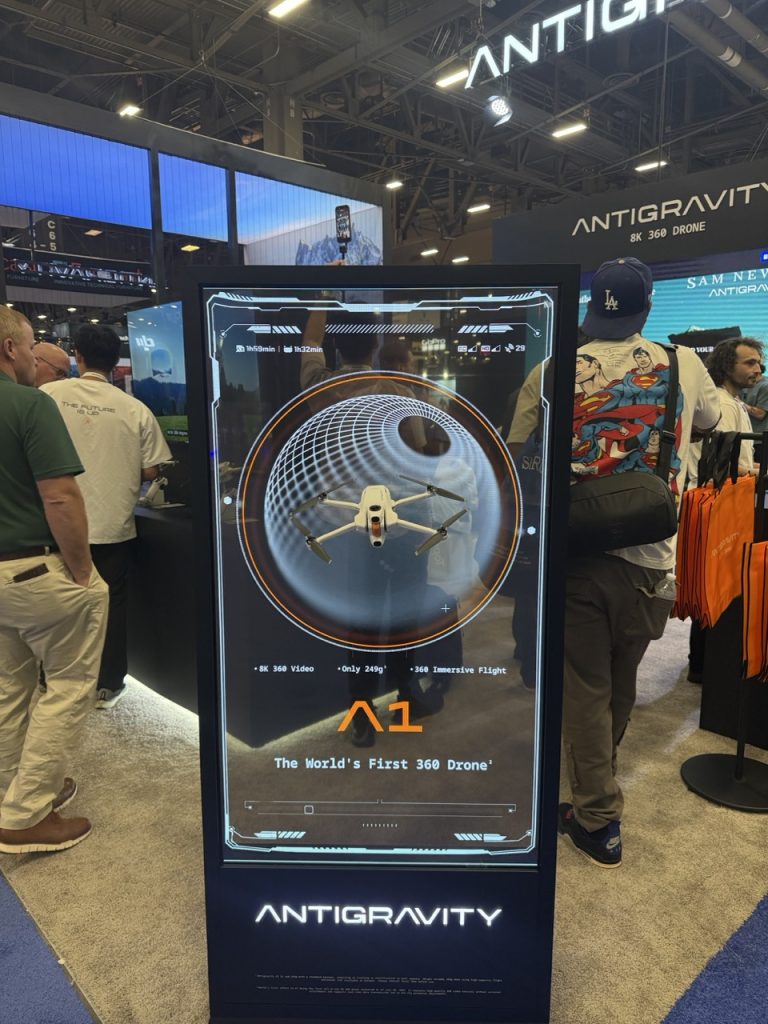
The Antigravity A1 was shown at NAB, and it does 8K 360 video at the magic number of 249g, giving a 360 immersive flight experience. The secret seems to be putting on lens on top of the camera, and one below, with the propellers in between. I’m assuming the software stitches the two images together and you don’t see the propellers at all.
Get it here: https://www.antigravity.tech/us/drone/antigravity-a1
New GoPro
GoPro announced the new Mission 1, Mission 1 Pro, and Mission 1 Pro ILS.
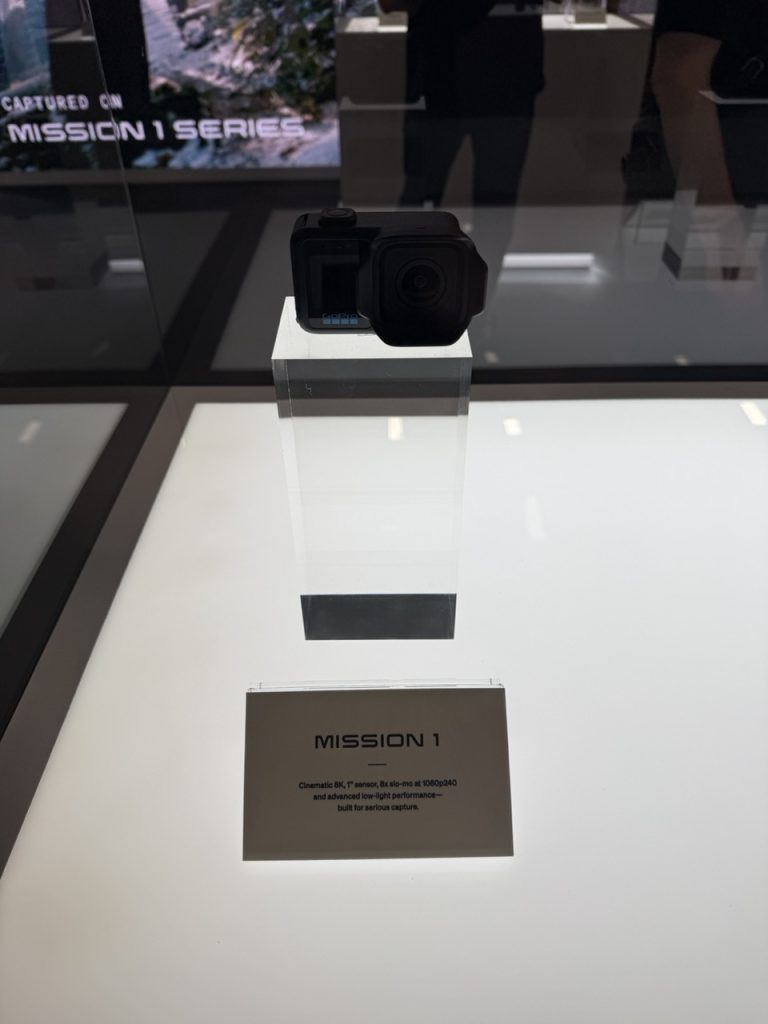
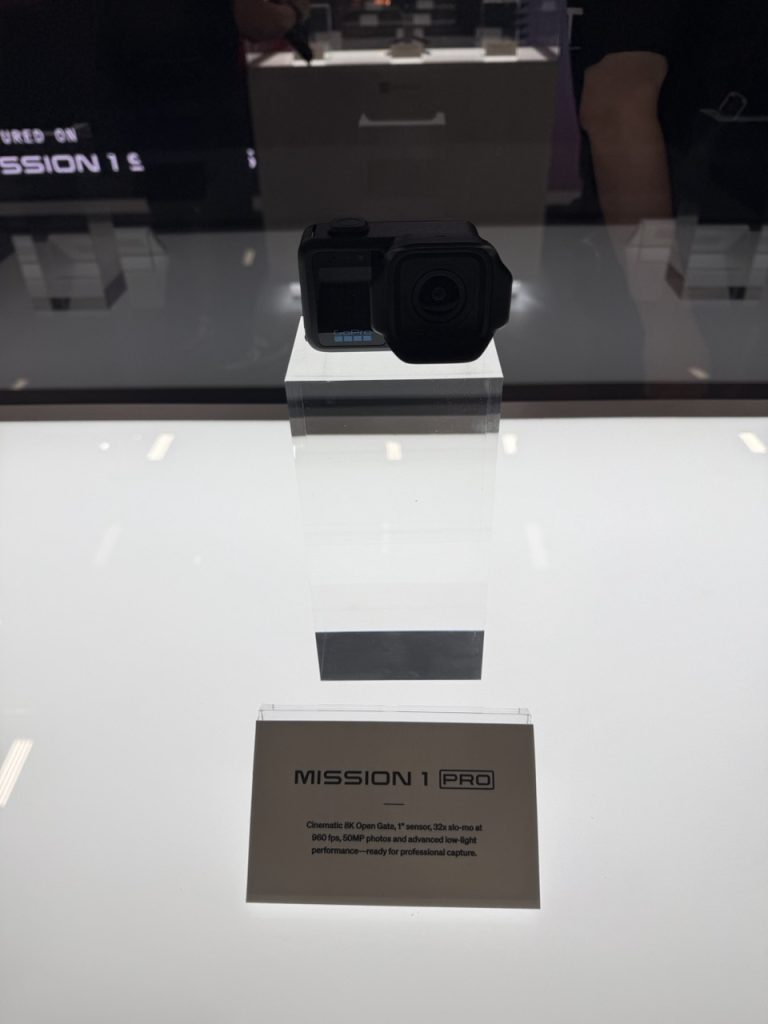
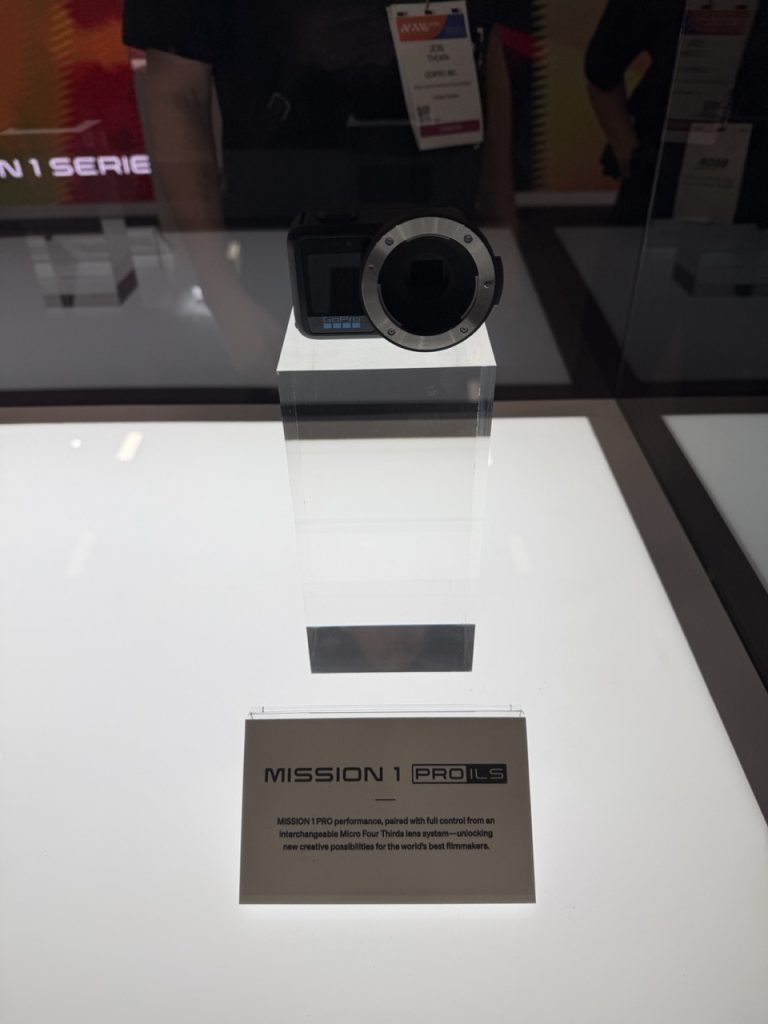
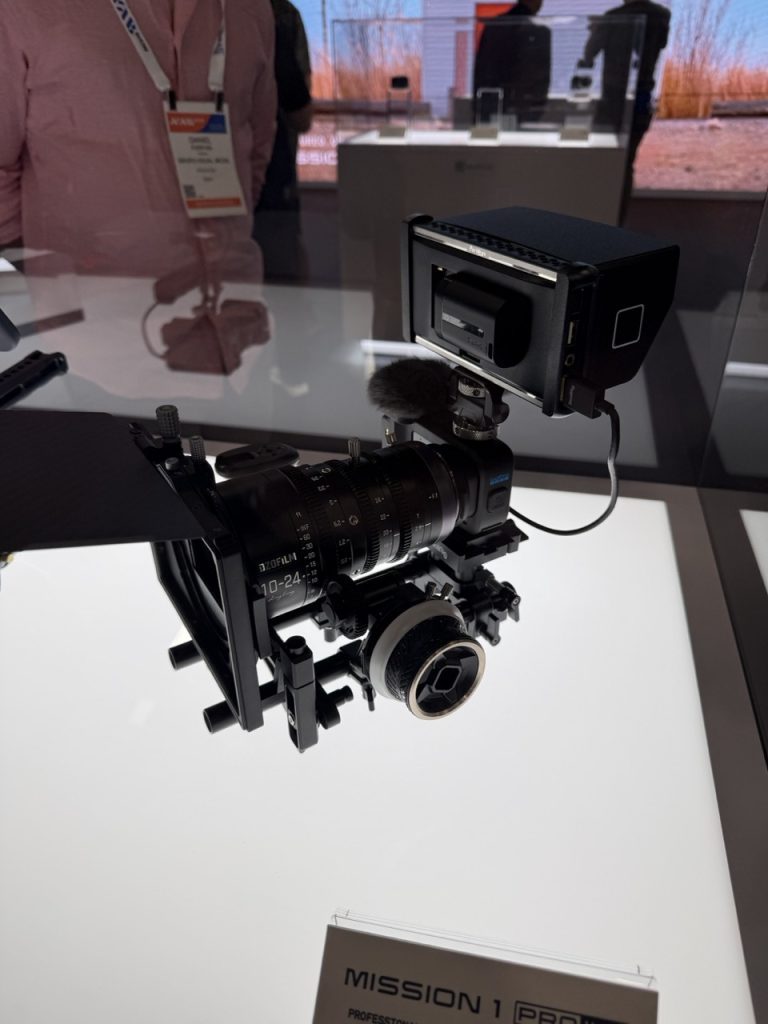
The Mission 1 model offers an 8K, 1” sensor (much bigger than previous GoPro’s 6.74×5.05mm), 8x slo-mo at 1080p240 and advanced low-light capture. The Pro version offers 8K open gate with a 1” sensor, 32x slo-mo960fps, and 50MP photos with advanced low-light performance. And the Pro ILS model boasts Mico Four Thirds sensor with a mount for interchangeable lenses. They even showed a decked-out ILS model which sorta made me giggle thinking about a go pro on a cine rig. But it all seems to check out for a reasonable price. It will be interesting to see if this catches on as a popular option.
Get it here: https://gopro.com/en/us/
Storage
OWC announced a new DIY SSD storage option for Thunderbolt 5. It’s the Express 4M2 Ultra.
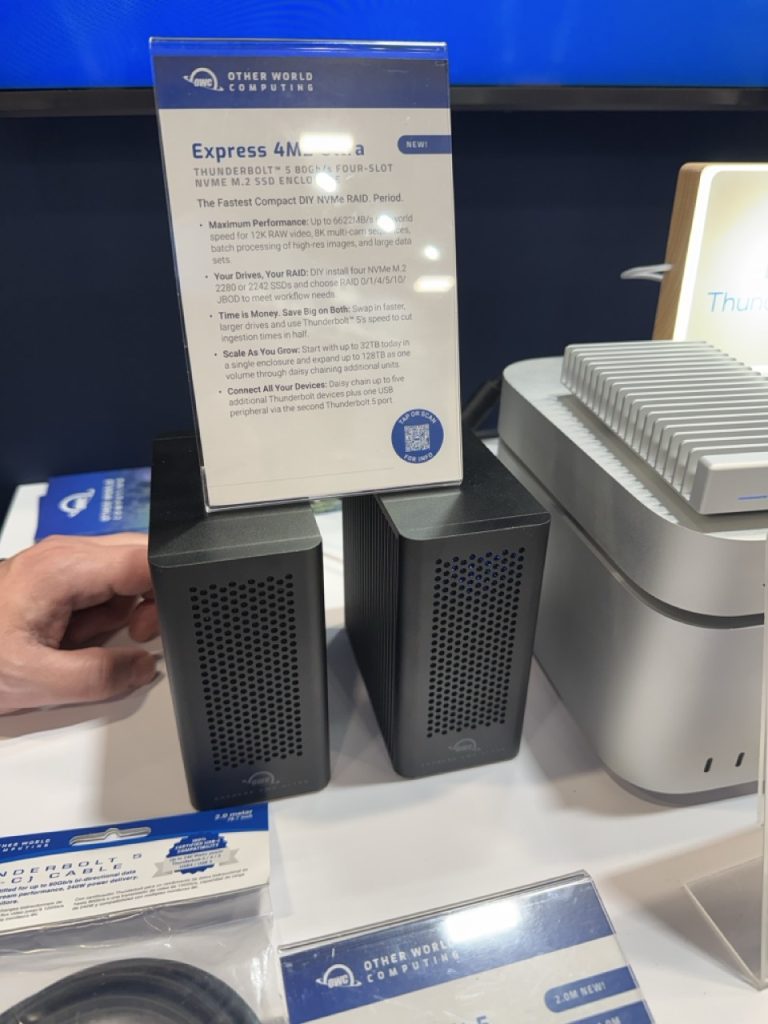
It’s branded as the “fastest compact DIY NVMe RAID,” which it is! You get up to 6622MB/s speed by installing four NVMe M.2 2280 or 2242 SSD’s with RAID 0/1/4/5/10/JBOD. And Thunderbolt 5 gives you 80Gb/s transfer speed. You can scale it as you grow by daisy-chaining the devices (up to 5!). This does require a power source besides the Thunderbolt Cable, so not perfect if you’re working very remote, but it’s a great solution for DIT’s and editors who need fast transfers and editing 8K-mulitcam or 12K video. Listed at $399.
Get it here: https://www.owc.com/solutions/express-4m2-ultra
AI
As far as AI goes, many post-production vendors from Adobe to BlackMagic showed how their editing, audio, and color correction software (among other programs) is integrating AI into its workflow. While I often see adds on Facebook for apps that will “edit for you,” the major professional companies are more about utilizing AI to help with difficult professional tasks within the programs to help the editor, such as masking, or audio sweetening. While I didn’t spend too much time investigating all the options, this is going to be a big change and is evolving quickly. I don’t think most professionals want AI to edit for them, they just want AI to make time-consuming tasks simpler.
See any errors or updates or something great I missed? Please leave a comment below!